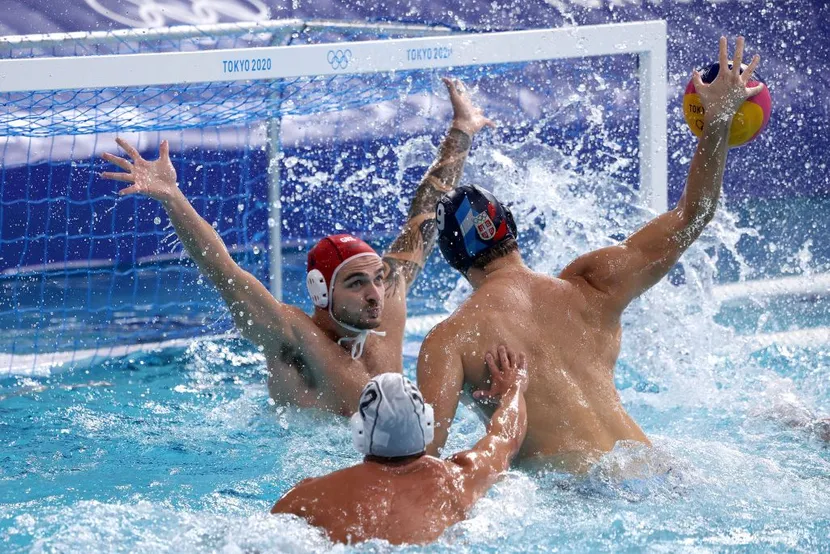
Don’t be fooled by the cute Princess Leia headgear; water polo is brutal…..
It is fast, physical and unforgiving, with most of the kicking, tackling, and <ahem> tugging largely invisible because it happens under the water. And my son loves it!
From the stands, it can look chaotic. In the pool, it is anything but. Every move is deliberate and practised. However, every ball throw, sprint and tackle can be influenced by fatigue, pressure, and the constant need to not let your teammates down.
And as the Manager for my son’s team, I have a window into a microcosm of leadership styles and characteristics – the coaches…
During the season, three distinct coaching (Leadership) styles have stood out. And the parallels with the workplace are impossible to ignore.
The Shouters:
Every team seems to have one. The coach whose voice cuts through the noise, whose instructions are loud, urgent, and impossible to ignore.
In water polo, this style can be effective in those chaotic moments. When the clock is ticking, teenage emotions are on the rise, and when set plays are breaking down, clarity and authority matter. Players need to be directed and know exactly what is expected of them.
Command and control under pressure
In the workplace, these leaders often emerge during a crisis. Now I’m not suggesting bellowing across the office floor is acceptable behaviour, but when tight deadlines, high stakes, or operational failures are looming, the situation often demands decisiveness, clear instruction and speed.
Command-and-control has its place, but too much of it can break down confidence, autonomy, and culture within teams. It shouldn’t be the only tool in the kit bag.
The Quiet Talkers:
Then there are the quieter coaches. The ones who pull a player aside, speak calmly and ask questions.
These coaches build the deepest trust. They see the individual, not just the cap number. Their impact may not be immediately visible from the sidelines, but it shows up in consistent performance and growth over time. A reassuring hand on a shoulder is often all that’s needed to build confidence, resilience and commitment.
In a work environment, this is the leader who invests in development.
They give feedback privately, listen actively, and tailor their approach. They may not dominate meetings, but their influence is profound and lasting.
The risk? In high-pressure situations, their calm can be mistaken for passivity, unless balanced by more visible leadership.
The Enthusiastic Supporters:
There are also the relentlessly positive coaches. The encouragers. The ones celebrating effort as much as outcomes.
In a contact sport like water polo, this enthusiasm can be the difference between a player (or team) giving up or giving it their all.
Energy can be a performance multiplier
At work, these leaders create momentum. They boost morale, reinforce culture, and remind teams why their work matters, which can be crucial in challenging situations or long projects.
Left unchecked, however, enthusiasm without accountability can drift and missed deadlines creep in.
So, Which Style Is Best?
Well, sitting poolside, each on their own, is insufficient, which is why there is usually an Assistant Coach for balance.
The most productive teams, whether in the pool or an office, benefit from a combination of leadership characteristics – depending on the situation. Sometimes embodied in one exceptional leader, and sometimes sprinkled across the leadership team.
Workplaces are complex. They require decisiveness, empathy, and energy, often all at the same time.
So the real question isn’t which style is right or wrong, but whether your ELT has the range and adaptability to achieve the desired outcome at any given time. And a good starting point is to identify the Leadership Styles within your business.